

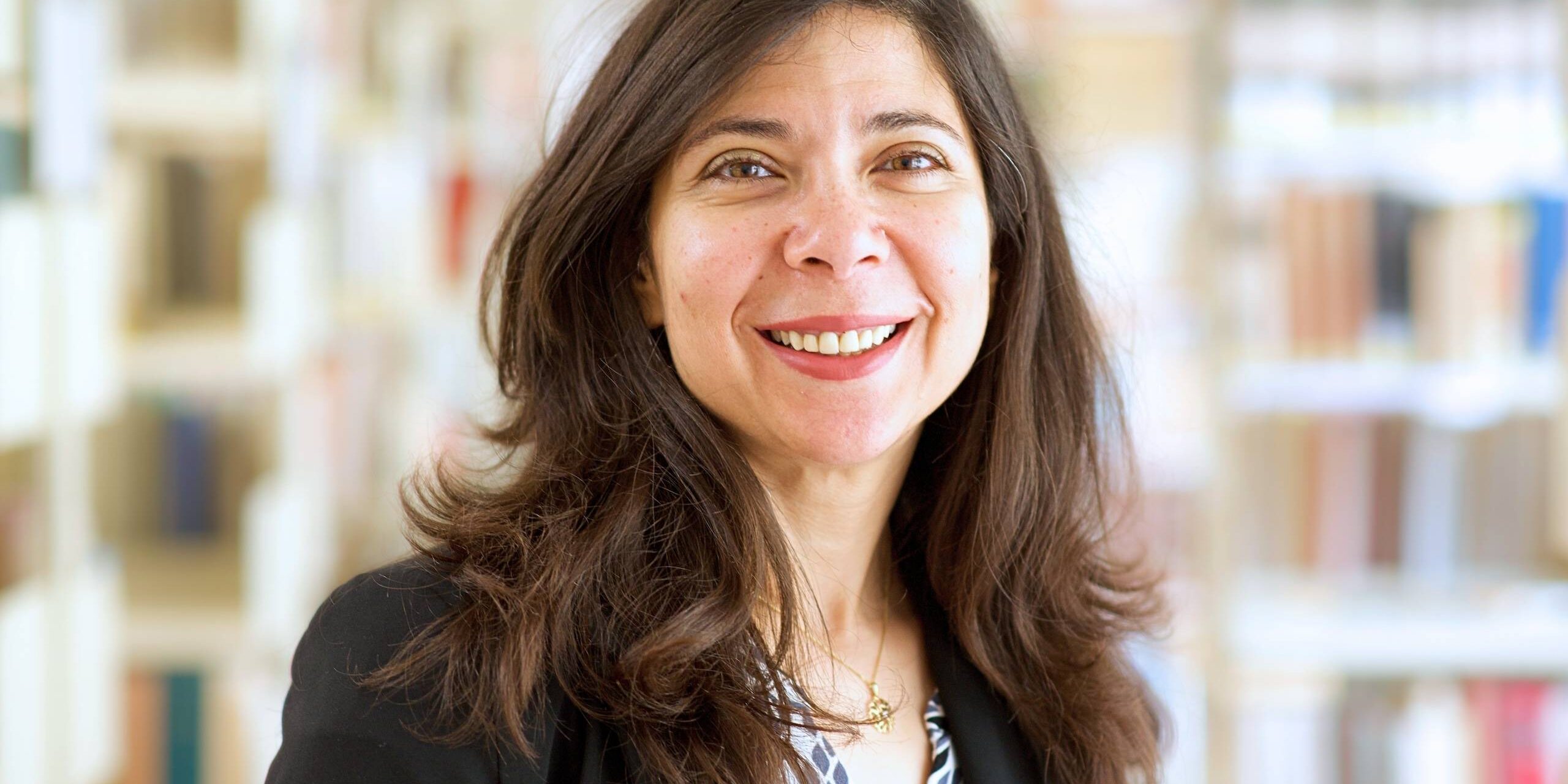
Hanan Badr co-author in new publication on Algorithmic Censorship
A new study shows how Facebook’s algorithms systematically suppress pro-Palestinian content — and how users fight back.
Together with Tamer Farag, Freie Universität Berlin, and Florian Primig, Ludwig Maximilian University of Munich, Hanan Badr, Head of the Division Public Spheres and Inequalities at the Department of Communication Studies at the University of Salzburg, published a new study in Communication, Culture and Critique, an International Communication Association journal published by Oxford University Press. The article Algorithmic Censorship, Power, and Resistance in the Arab Region: A Case Study of Pro-Palestinian Content, in a Special Issue entitled Palestine as Communicative Epistemology.
The study addresses the research question: how do social media platforms moderate Arabic pro-Palestinian content, and what political and technical power structures shape those decisions? Drawing on digital ethnography and expert interviews, the article examines how Meta moderates, restricts, and makes pro-Palestinian content invisible on Facebook.
The authors develop a typology of algorithmic and non-algorithmic resistance strategies through which users attempt to regain visibility despite perceived censorship — from linguistic evasion and cultural coding to technical camouflage. Crucially, the study argues that the underrepresentation of Arabic in language models and Meta’s opaque content policies are not purely technical. They reflect deliberate human design choices embedded in broader structures of political and economic power.
The publication was also featured in the AlgorithmWatch newsletter.
The full article is available via Communication, Culture and Critique (Oxford University Press).