Lunchtalks Sommersemester 2026
Wann? jeweils Dienstags 12:00 bis 13:00 Uhr
WO? HS 382, Gesellschaftswissenschaftliche Fakultät
(keine Anmeldung erforderlich)

Entdecken Sie das neue Masterstudium "Kommunikation, Kultur & Partizipation"
(keine Anmeldung erforderlich)
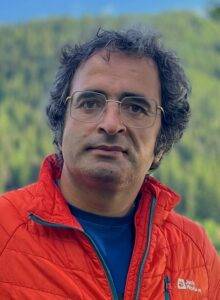
Social media suppression in authoritarian regimes: a multidimensional approach
The project investigates the networks, actors, computational mechanisms, and discursive strategies through which authoritarian regimes, e.g., Iran during the Women, Life, Freedom movement, suppress social media movements. In particular, it focuses on propaganda, disinformation, and incivility toward different political groups and their effects on anti-regime practices.
Vortragende: Hossein Kermani (Universität Wien)
Termin: 03. März 2026, 12:00 bis 13:00 Uhr
Digitalisierung politischer Identität: Eine qualitative Untersuchung zur Rezeption politischer Internet-Memes
In seiner Dissertation untersucht Markus Bachofner, ob und in welcher Weise Internet-Memes politische Identität prägen. Die Rezeption von Memes wird dabei über den Kreislauf kultureller Bedeutungsproduktion, das Encoding–Decoding-Modell sowie die Ansätze des Doing Media und der Agency beschrieben. Die Ebene der Identifikation wird theoretisch durch Albert Banduras Kognitionstheorie und den Symbolischen Interaktionismus gerahmt. Mithilfe qualitativer Bildanalysen, Gruppendiskussionen und Einzelinterviews wird aufgezeigt, welchen Einfluss Internet-Memes auf die Herausbildung politischer Identität haben.
Vortragende: Markus Bachofner (KoWi Salzburg)
Termin: 10. März 2026 12:00 bis 13:00 Uhr
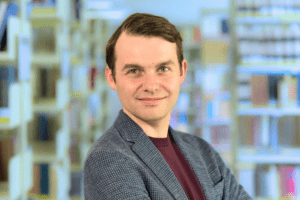
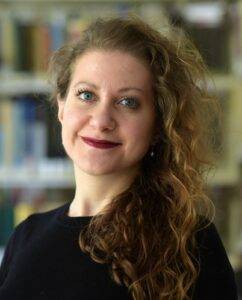
Pathways for Climate Change Communication in Jordan: Youth Activism, Journalism, and Digital Media
How can climate change communication in the Global South move beyond donor-driven and Western-dominated narratives? Hilals PhD project examines how Jordanian youth activists and journalists navigate the tensions between international funding requirements, state-led agendas, and community-rooted environmental storytelling. Through three interconnected papers, the research investigates whether journalism and digital platforms can serve as sites of epistemic agency in a country disproportionately impacted by climate change yet marginalized in global climate narratives.
Vortragende: Thawab Hilal (KoWi Salzburg)
Termin: 14. April 2026 12:00 bis 13:00 Uhr
Mobility and Surveillance: the marriage of 5G networks with Artificial Intelligence (AI)
The 5G-IA union is a fundamental element of a promised new cycle of capitalist accumulation which strengthens the centrality of information and surveillance technologies as means of exploitation of populations’ bodies and subjectivities. This presentation builds upon how mobility is constituted in the operation of mobile communication networks to describe the relationship of this infrastructure with data extraction and processing for monetization and appropriation of surplus value. It analyses the relation of co-dependence between 5G networks and AI technologies by describing AI deployments within 5G network management and AI applications that rely on 5G connectivity. Finally, it warns about the escalation of surveillance and data extractivism resulting from the 5G–AI and recognizes the importance of claiming the right to „stay out“.
Vortragende: Diego Vicentin (School of Applied Sciences (FCA), University of Campinas)
Termin: 21. April 2026 12:00 bis 13:00 Uhr
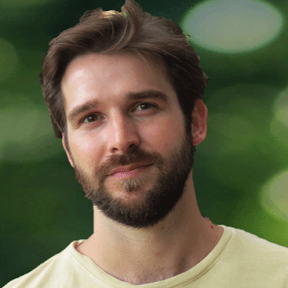

Articulations of nature and culture
Elisabeth Wennerström is a PhD candidate at the Institute of Communication Studies and Journalism, Faculty of Social Sciences, Charles University, Prague. Her current research focuses on the discursive construction of nature and culture, highlighting their entanglement in Swedish environmental journalism. Supporting this research is the poststructuralist and post-Marxist discourse theory on identity and the political, assemblage theory , and a particular interest in ‘natureculture’ – a conceptualization by Donna Haraway. The presentation includes the articulations of media materials across public service, private media and collaborative networks of journalists in Sweden since 2020.
Vortragende Elisabeth Wennerström (Charles University)
Termin: 19. Mai 2026 12:00 bis 13:00 Uhr
In deep waters: tracing media ownership through imprints, company reports, and business registries
Media ownership transparency is increasingly framed in Europe as a tool to safeguard pluralism and strengthen accountability. This presentation discusses how and why this is still more of a goal than a reality. Based on the Euromedia Ownership Monitor (EurOMo, https://media-ownership.eu), it shows the steps to ascertain ownership and control of two major media groups, namely DPG Media (Belgium) and Czech Media Invest (Czechia), cross-referencing imprints, annual reports, filings, and registries. European media policy will improve some of the problems, but many issues will likely remain.
Vortragende: Tales Tomaz (KoWi Salzburg)
Termin: 16. Juni 2026 12:00 bis 13:00 Uhr
Vielen Dank für Ihre Anmeldung zur KWT 2026!
Wir haben Ihre Anmeldung erhalten und bestätigen diese hiermit.
Sie erhalten keine weitere Bestätigungs-E-Mail. Alle Informationen zur Tagung finden Sie auf unserer Website: https://www.kowi-salzburg.at/forschung/tagungen/kwt2026/